

Every commercial building depends on a reliable fire sprinkler system to keep people and property safe. These systems are designed to respond automatically when the temperature in a room reaches dangerous levels far beyond what smoke, steam, or a burnt meal could cause.
This article explains what triggers sprinklers, how the system works, and the situations that can lead to both intentional and accidental activations.
How a Fire Sprinkler System Works
A fire sprinkler system may look simple from the outside, but its design follows precise engineering to ensure water only flows when it’s genuinely needed. Inside the system are networks of pipes filled with either water (in wet-pipe systems) or air and valves (in dry or pre-action systems), all connected to individual sprinkler heads. These pipes stay pressurized at all times, ready to release water within seconds when triggered.
Each sprinkler head operates independently, meaning if one area of a building heats up due to fire, only the nearby sprinkler activates. This prevents unnecessary flooding in areas where there’s no danger, conserves water, and helps quickly contain flames.
At the heart of each sprinkler head is a heat-sensitive element, the part responsible for deciding when water should be released:
- Glass bulb: A small, sealed capsule filled with a colored liquid that expands when exposed to rising temperatures. Once it reaches about 155–200°F, the liquid bursts the glass, opening the valve and allowing water to flow.
- Fusible link: Found in certain sprinkler types, this small metal piece melts at a specific temperature, releasing the exact water flow mechanism. It’s a simple yet reliable design that’s been trusted in commercial buildings for decades.
Together, these mechanisms ensure that only true fire conditions, not dust, steam, or smoke from a kitchen, can activate the system. Understanding how this works makes it easier to see why the following five activation scenarios happen and how to prevent the accidental ones.
Read Also: Choosing the Right Fire Sprinkler System: Understanding the Four Main Types
5 Common Scenarios That Trigger Sprinkler Activation
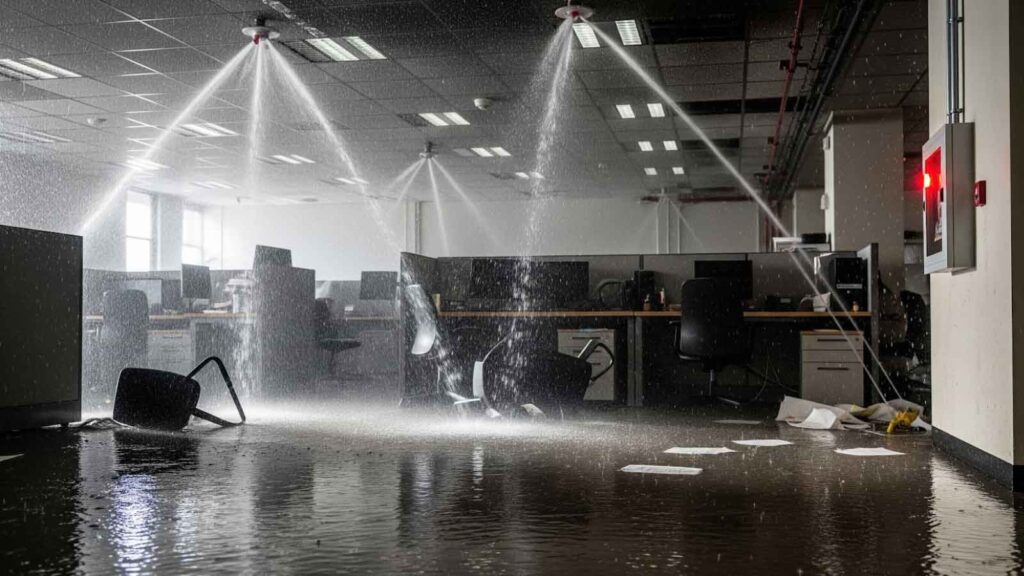
Fire sprinkler systems are carefully engineered to activate only under very specific conditions. But sometimes, other factors, both environmental and mechanical, can set them off unintentionally. Below are the five most common scenarios that explain how and why sprinkler heads release water, from genuine fires to avoidable maintenance issues.
1. High Heat from a Fire
Sprinklers are designed to react when the surrounding air becomes dangerously hot, not when there’s just smoke or steam. Heat from a fire rises rapidly, creating pressure on the sprinkler’s heat-sensitive element until it bursts.
- Heat as the main trigger: Most sprinkler heads activate at temperatures between 155°F and 200°F, depending on their design. This ensures they remain inactive during normal conditions but respond instantly when flames are nearby.
- Built-in precision: The glass bulb or fusible link inside the head expands or melts once it reaches its threshold, opening a valve that releases water under pressure. This precision mechanism prevents accidental discharges from cooking smoke or dust.
- Localized activation: Each sprinkler works independently, so only the one closest to the heat source will activate. This targeted approach minimizes water use while controlling the fire before it spreads.
- Lifesaving efficiency: By reacting in seconds, sprinklers can suppress flames long before firefighters arrive, thereby reducing both property damage and health risks associated with smoke inhalation.
2. Accidental Mechanical Damage
Sometimes, sprinkler heads discharge not because of heat, but because they’re physically damaged. This is especially common in facilities with tall equipment or high-traffic ceilings, where workers might bump their heads by accident.
- Everyday impact risks: A ladder, forklift, or even a moving cart can strike the sprinkler head, shattering its glass bulb or bending the fusible link. Even light contact can trigger a full release since these parts are pressure-sensitive.
- Consequences of damage: Once broken, the sprinkler immediately releases water at full pressure, flooding nearby areas within seconds. This can damage inventory, equipment, or electronics if not quickly controlled.
- Simple prevention methods: Installing wire cages or protective guards around sprinkler heads helps prevent accidental strikes. These inexpensive add-ons are standard in industrial spaces where clearance is limited.
- Professional oversight: During facility safety checks, technicians performing fire protection services often verify clearance zones and recommend barriers to reduce the risk of accidental activations in busy work areas.
3. Extreme Cold or Freezing
Cold weather is another cause of unwanted sprinkler activation, especially in wet-pipe systems that hold water in their lines year-round. When temperatures drop below freezing, trapped water can turn to ice, causing internal pressure problems.
- How freezing damages the system: As water freezes, it expands, putting pressure on pipes, valves, and sprinkler heads. When the ice melts, that trapped pressure can burst through cracks, leading to leaks or full discharges.
- Common problem zones: Unheated attics, loading docks, and basements are the most likely areas to freeze. Areas near open doors or poor insulation are also vulnerable to temperature fluctuations.
- Preventive solutions: Using pipe insulation, installing heating cables, or switching to a dry-pipe system in cold-prone zones helps stop ice from forming. These minor upgrades can prevent costly flooding during thawing periods.
- Seasonal safety checks: Regular pre-winter inspections ensure that pipes are properly sealed and temperature controls are functioning. This step helps business owners avoid surprise activations caused by freezing.
4. Corrosion and Poor Maintenance
Over time, wear and environmental exposure can slowly deteriorate sprinkler systems. When left unchecked, corrosion or mineral buildup can cause leaks that appear to be activations or prevent the system from functioning properly during an actual fire.
- Causes of corrosion: Moisture, oxygen, and trace minerals inside the pipes combine to create rust and scale buildup. Over the years, this weakens the metal and can block nozzles or cause tiny cracks that leak under pressure.
- Impact on performance: If corrosion spreads, it can interfere with the sprinkler’s ability to release water evenly. This leads to inconsistent coverage during a fire or spontaneous drips that mimic activation.
- Prevention through maintenance: Flushing pipes, testing valves, and replacing aging components help prevent minor issues from becoming significant problems. These steps maintain system reliability and extend its lifespan.
- Early detection advantage: Regular professional inspections catch corrosion before it causes malfunctions. This proactive care also helps businesses stay compliant with local safety standards and insurance requirements.
5. System-Specific Activations (Pre-Action and Deluge Systems)
Some sprinkler systems are built for specialized facilities that face higher risks or sensitive environments. These systems have different activation rules compared to standard wet-pipe designs.
- Pre-action system operation: Found in spaces such as museums or data centers, these systems require two signals to release water: one from a smoke or heat detector and another from the sprinkler head itself. This double confirmation prevents accidental discharge on valuable property.
- Deluge system purpose: Used in chemical plants, aircraft hangars, or power facilities, deluge systems release water from all open nozzles simultaneously when triggered by an external alarm. Their design ensures rapid coverage of high-hazard areas where fire can spread instantly.
- Precision through design: Both systems use additional sensors and detectors to avoid false triggers while offering faster response times when a verified fire is detected. This makes them suitable for mission-critical buildings.
- Maintenance requirements: Because these systems are more complex, they demand frequent inspection and testing by certified professionals to ensure all detection components work together correctly.
How to Prevent Accidental Sprinkler Activation
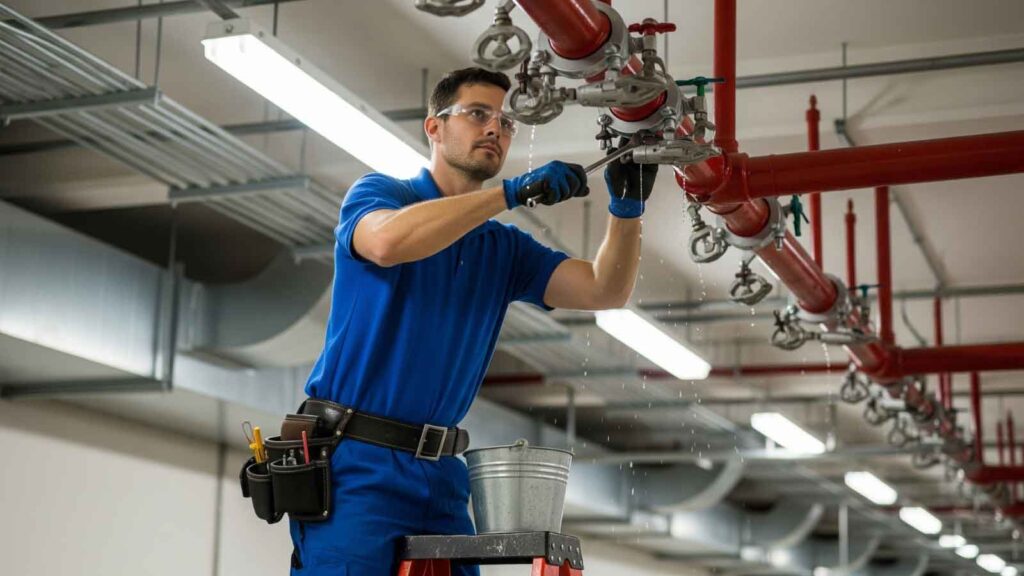
Most sprinkler activations outside of fire events can be prevented through proper care, regular checks, and staff awareness.
Each step below targets a different risk factor, impact, freezing, corrosion, or improper system handling, so every measure adds a layer of protection against accidental discharge.
- Schedule regular maintenance and inspections by certified professionals: Routine servicing is the most reliable way to ensure your system functions properly. During a fire alarm inspection, technicians check for leaks, corrosion, and pressure issues that could cause unwanted activations. These visits also confirm that heat-sensitive parts are in good condition. Regular documentation keeps your building compliant with local safety regulations.
- Keep storage and tall equipment away from sprinkler heads: Even small bumps or accidental contact can break the delicate glass bulb. Maintaining clearance zones prevents damage from ladders, forklifts, and stacked boxes. Facilities should mark “no-storage” areas below sprinklers to avoid collision risks. This simple step protects your investment and ensures that sprinklers activate only when truly needed.
- Protect pipes and heads in cold areas with insulation or heat tracing: In cold environments, water inside pipes can freeze and expand, leading to cracks and leaks. Wrapping exposed pipes with insulation or installing heat-tracing cables prevents ice formation during winter. These solutions keep water flowing freely without pressure build-up. A quick pre-winter check each year helps avoid costly freeze-related activations.
- Ensure corrosion-resistant materials and annual system flushing: Using high-quality, rust-resistant metal fittings reduces long-term wear and internal buildup. Over time, even small amounts of mineral deposits can block valves or create false triggers. Flushing the system yearly removes these impurities and keeps water lines clear. This proactive care extends your system’s lifespan and reliability.
- Educate employees about avoiding contact with sprinkler heads or control valves: Most accidental discharges are caused by unintentional interference. Staff should understand where sprinklers and control valves are located and be trained to avoid them during maintenance or movement of tall items. Posting visible reminders or safety signage reinforces awareness. A brief annual briefing can help prevent costly water damage and downtime.
When to Call for Professional Help
If a sprinkler activates unexpectedly, responding quickly and safely is key to minimizing damage. It’s important to know who to call and what steps to take while waiting for help.
- Shut off the main water valve if safe to access: This stops further water flow and prevents additional flooding. However, it should only be done if you can safely reach the valve without entering a hazardous area. Turning off the system too late can lead to thousands of gallons of unnecessary water being release. Always keep the valve’s location clearly marked for emergencies.
- Contact a certified fire protection company immediately: Professional technicians can determine whether the activation was caused by heat, mechanical damage, or a system malfunction. They’ll also assess if other parts of the system were affected. Quick reporting ensures your building remains compliant and safe for reactivation.
- Schedule a full inspection and system reset after the incident: After an activation, the system should be thoroughly tested to confirm there’s no residual damage. This includes checking wiring, sensors, and sprinkler heads for hidden wear. A licensed technician will restore your system’s readiness through professional servicing and, if needed, fire alarm installation or replacement parts.
- Work with trusted professionals for long-term prevention: Partnering with companies like Kimble & Company ensures your entire fire safety network stays coordinated. Their experts offer maintenance, testing, and upgrades tailored to your building’s layout. Ongoing support reduces the risk of future accidental activations and ensures the system performs correctly in real emergencies.
If your facility needs expert maintenance or an updated fire protection plan, reach out to Kimble & Company today to schedule an inspection or consultation and ensure your building is always protected.